
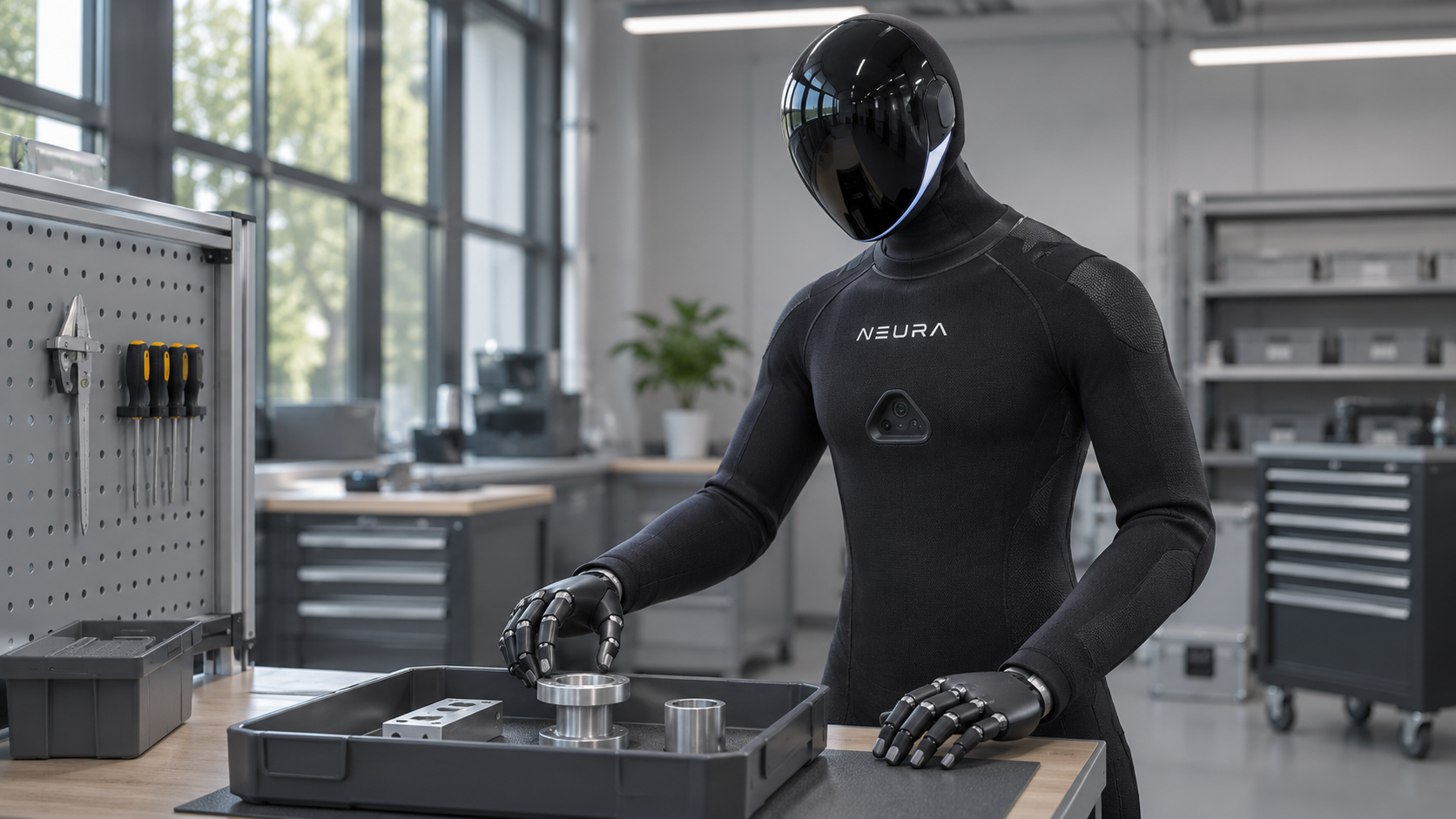
A robot can pick up a component neatly and still fail at the next step because it has lost track of what happened before. Was the sleeve inserted? Has someone moved the workpiece? Is it appropriate to resume after an interruption? These are the questions that decide whether an impressive demonstration becomes something people can actually use at work.
The collaboration between NEURA Robotics and NXAI puts the history of a task at the centre of the robotics debate. What interests me most is the moment after the first successful movement. That is where difficulties begin that are easy to overlook on a stage and expensive to overlook on a production floor.
In this article
What NEURA Robotics and NXAI announced
On October 20, NEURA and NXAI announced robot-memory research and an additional Neuraverse model. The partners’ announcement.
Industriemagazin covered the partnership on November 3. That timing matters for readers assessing the news. A report about a collaboration does not answer a buyer’s implementation questions. Planning a deployment requires a defined product version, appropriate hardware and convincing trials on the intended process. A development ambition cannot substitute for a performance commitment.
NEURA describes Neuron AI as combining visual, tactile, audio, robot-state and language inputs. Neuron AI introduction. NXAI identifies xLSTM as a research focus and Sepp Hochreiter as co-founder and Chief Scientist. NXAI.
Why a good camera image does not explain a workflow
Imagine a small assembly task. A housing sits in a fixture, with two similar sleeves beside it. The robot must insert one, check its position and put the finished item aside. A single image may show the locations of the objects. It may not establish which attempt already failed or whether the visible sleeve belongs to the current order. The surrounding sequence matters.
This is an editorial example, not a documented NEURA trial. It illustrates the requirement I would set for a learning robot: connect current observations with information about previous steps that can be checked. When the two disagree, inspect the situation again. An old assumption should not prevail simply because it has already entered the system.
At a shared workstation, someone may change the situation outside the camera’s view. The robot then needs a useful distinction between “last observed” and “confirmed now”. Those descriptions can sound almost interchangeable in a presentation. They have very different consequences when a machine resumes movement near a workpiece.
Working context and past experience ask different questions
I would separate two questions when evaluating a system. What information does it need for the current job? Which previous runs may influence a new job? The first could concern confirmed assembly progress. The second concerns experience gathered under conditions that may no longer apply. Treating them as one undifferentiated store makes it harder to ask the right questions.
I would therefore give a robot no credit simply for retaining more information. It needs to use the appropriate information and discard assumptions that have expired. A successful grip may become unsuitable after a tool change. An earlier position may mislead after a pause. A useful memory needs a sensible boundary around the conditions in which it remains valid.
The word memory also invites human comparisons that do little to help an operator. A stored or learned relationship does not establish consciousness. The productive question is more concrete: which information changes the next decision, and can the team understand why?
What xLSTM contributes to the discussion
xLSTM updates an internal state as inputs arrive; its research extends LSTM memory structures. xLSTM research. Another paper investigates xLSTM-based action models and reports favourable benchmark speed and performance. LRAM research.
For an industrial project, those findings suggest a question rather than a ready-made purchasing decision. Does the complete workflow stay responsive and reliable as more observations arrive? Benchmarks provide valuable starting points for researchers. Acceptance testing needs to include sensing, movement, exception handling and human intervention in the same picture. A fast model step offers little benefit if the workstation then waits a long time for manual assistance.
The same applies to quality. A plausible next action can rest on an incorrect assumption about the preceding task. I would deliberately introduce cases in which the recorded history has become inaccurate. That tells me more than repeatedly showing the easiest successful sequence under conditions that never change.
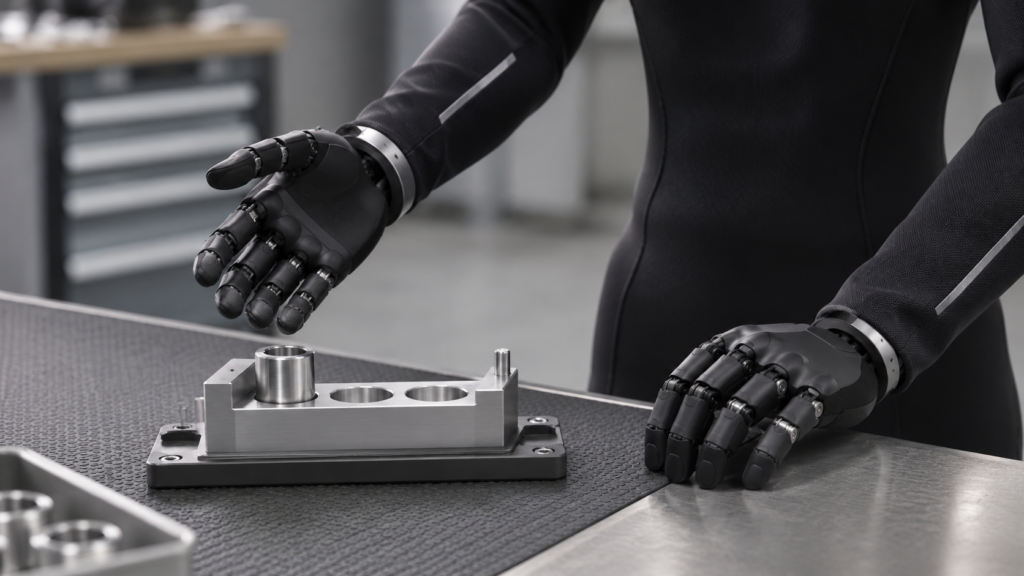
The revealing trial begins with an interruption
My first trial would be deliberately modest. An operator stops the process after a clearly defined step. A component is then removed or replaced by a similar one. After restart, the system must establish which conditions still hold. The assessment should cover completion and the ability to stop in a controlled way when the situation cannot be established confidently.
A second trial would involve a lost object. If a gripper no longer holds a component securely, continuing along the planned route may be inappropriate. A third could introduce a new order involving similar parts, checking whether assumptions from the earlier order improperly carry over. These are suggested tests, not claims about functions already available in this partnership.
For every run I would record the outcome, help required and time to resume. A clearly documented stop can be more informative than apparent success achieved with unnoticed assistance. Comparisons should state the task, lighting and permitted interventions. Without those details, two completion rates may describe quite different working conditions.
Neuraverse must make operational decisions understandable
NEURA describes Neuraverse as connecting robots, people and data; its Gyms provide training under controlled variation. Platform overview.
For users, that introduces an organisational task. Who can approve a new workflow? Which model version operates at each workstation? How can a team return to a version that was previously checked? If an improvement at one station creates trouble elsewhere, people need to identify the connection quickly. A platform should make those answers easier to find.
Process knowledge also needs a practical agreement before a pilot starts. What information is recorded, for how long and with whose access? An operator should understand whether a correction applies only to the present order or can influence later work. That distinction helps the team investigate unexpected behaviour without guessing what the machine might have retained.
What would make this valuable for European robotics?
The attractive part of European robotics, to me, is proximity to real production problems. Whether that becomes an advantage is decided at customer sites, with changing components, limited budgets and people responsible for starting the line each morning. Geographic origin cannot replace evidence. It can provide an opportunity for developers and users to work closely on the awkward details.
Our article on NEURA 4NE1 Gen 4 provides hardware context. The relationship between perception and action is explored in our coverage of Neuron AI and the combination of vision and touch. The Alpha Bionic Robotics Atlas offers a broader way to explore manufacturers and application areas.
My measure of progress is straightforward: after something goes wrong, are fewer mysteries left for the operator? If the system keeps a comprehensible account of progress, requests useful help and resumes in a controlled way, people experience the benefit directly. That everyday reliability is where the memory idea deserves to be judged.
FAQ: Understanding robot memory
Does robot memory imply consciousness?
No. Practical evaluation concerns information that influences decisions. It does not establish human experience or awareness.
Why is a saved video not enough?
A recording preserves observations. Taking action also requires deciding which observations are relevant and still valid for the current situation.
How can useful progress be recognised?
Through repeatable tasks with recorded failures, interventions and recovery times. An isolated successful movement answers only part of the operational question.
What should a pilot test first?
A clearly limited task, followed by interruptions and changed conditions. Define successful completion and an acceptable controlled stop before testing.
What needs agreement before collecting data?
Who may use the data and resulting skills, how corrections are handled and how outdated information can be removed or invalidated.
Do the images show a joint performance trial?
No. They are original AI illustrations based on the real NEURA design. They illustrate work situations and do not document an NXAI performance demonstration.

Author Nico Nuss has worked with mobile computing and automation software since 2001. His many years of experience and strong interest in emerging technologies shape his work on robotics and artificial intelligence.