
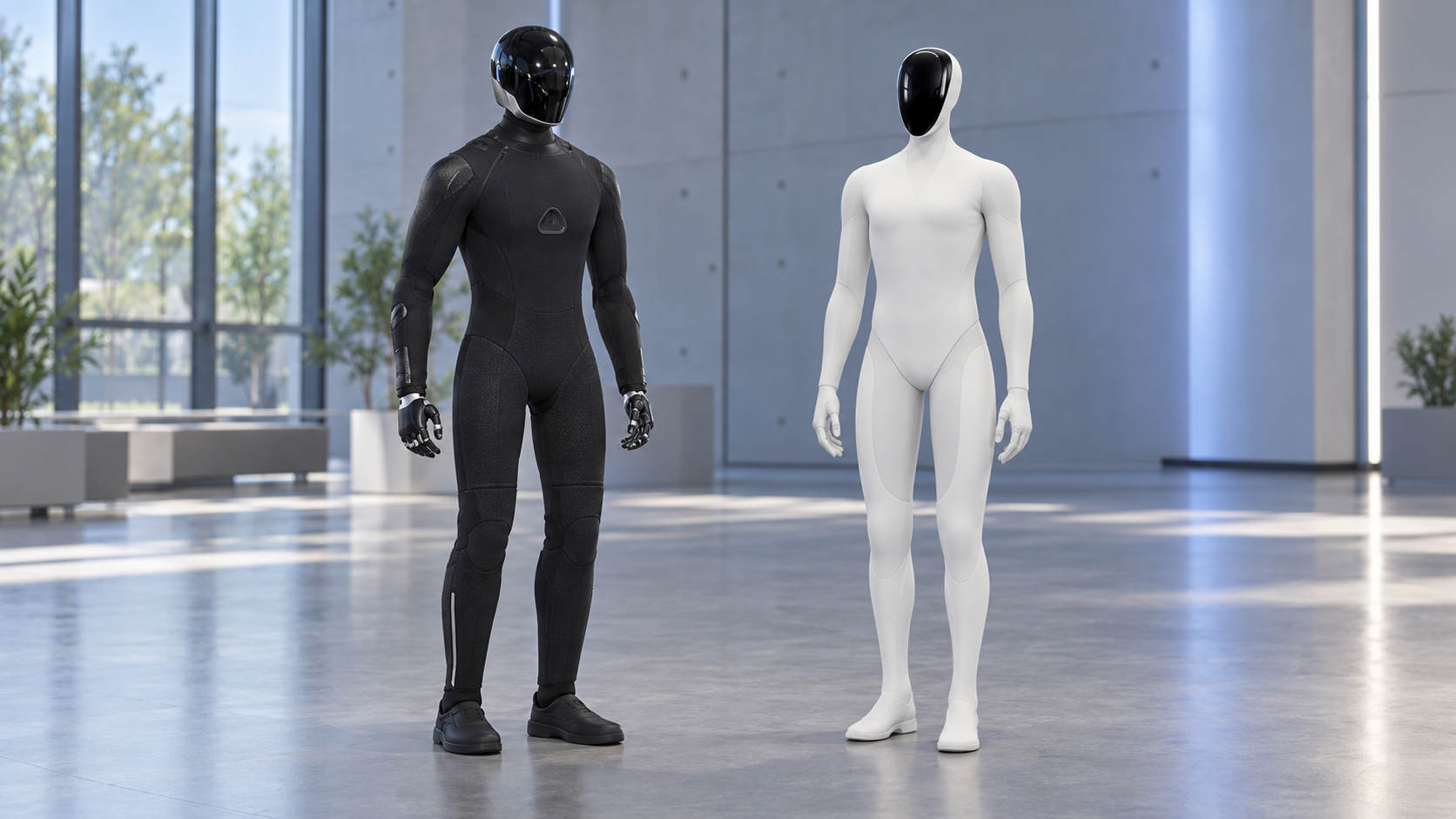
One robot wears black and looks ready to join a production team. The other arrives in white, with a slim silhouette and an almost human presence. NEURA 4NE1 Gen 4 and XPENG IRON explain the excitement around humanoid machines without needing much introduction. The idea of a robot working in rooms built for people suddenly has a recognisable body. Its value, however, takes longer to establish.
I want to know whether the machine remains useful when a container is misplaced, a visitor changes their mind or a grasp fails. That is where this comparison becomes interesting. Beyond appearance lies a practical question: which system can complete a defined job reliably, and how much human support will that require? Buyers need an answer they can test rather than a favourite picked from a presentation.
In this article
NEURA 4NE1 Gen 4 versus XPENG IRON: what has changed?
NEURA introduced Gen 4 at Munich’s RoboGym opening on October 22, 2026. NEURA announcement.
The product page claims 20 percent less weight, a textile covering and preparation for series production. 4NE1 product page.
For a purchasing decision, I would separate the model being introduced, the skill being demonstrated and the system actually offered with a defined scope of work. They may be at different stages. At a demonstration, ask which hardware and software configuration will appear in the contract. This prevents specifications from several generations becoming an imaginary machine that no supplier actually provides.
XPENG announced its IRON production-line launch; deliveries in China and overseas are planned for 2027. XPENG announcement.
A production milestone is useful information, but it does not describe the installation available to a particular customer. I would ask for the proposed configuration, delivery conditions and local support before treating either robot as a ready replacement for an existing process. This makes the discussion more useful than declaring one manufacturer finished and the other still a concept.
Why NEURA’s training approach deserves attention
TUM describes 48 training cells with initially around 100 humanoid and service robots at RoboGym. TUM announcement.
For me, that draws attention to the work hidden behind a polished demonstration. A grasp has to cope with different starting positions. Objects may reflect light, deform or hide behind one another. A carefully arranged table makes a task easier. A meaningful workplace trial should include variations that occur during an ordinary day, with the conditions recorded so another attempt can be compared fairly.
NEURA describes Neuron AI as running locally and combining vision, touch, force and sound, among other inputs. Neuron AI.
I would still judge the proposal by its results. Which disturbance does the system recognise? When does it stop? What must a person take over? Local processing may be useful to an operator, but a complete deployment also needs an understandable account of updates, training and data movement. These are questions to resolve for the offered installation, rather than assumptions to make from a single feature.
Our separate introduction to NEURA 4NE1 Gen 4 provides further context about the generation. In this comparison, the more useful next step is to turn interest in the robot into a specific task with an acceptance test. That is the point at which a promising description can become a plan a team can actually evaluate.
What XPENG’s humanlike IRON needs to prove
XPENG’s technology page shows walking, coffee preparation and gestures, and lists guiding and shopping assistance as roles. IRON technology page.
Those examples invite a closer look at interaction. At a reception desk, an arm movement is only one part of the service. A visitor needs to understand whether the robot is speaking to them, where they should go and how to obtain help. I would test several people, varying distances and different questions, rather than relying on a single cooperative encounter.
A natural gesture can make an instruction easier to follow. The information must also be correct. Does the system clarify an ambiguous request? Can it correct a mistaken direction? What happens when the visitor interrupts or walks away? These moments may be less dramatic than a convincing handshake, but they determine whether the interaction saves anyone time.
I would avoid inferring everyday competence from a humanlike shape. The required standard depends on the job. A showroom introduction and a material handover need different evidence of success. Set the purpose before the trial and it becomes much easier to decide whether a demonstration represents completed work, a useful interaction experiment or an unfinished capability.
Hands matter when the task stops being tidy
Imagine a simple transfer: pick up a container, carry it to another position and set it down. For a meaningful comparison, I would use the same containers, route and starting arrangement for both systems. I would then add difficult variations, such as a displaced grip position, a changed fill level or different lighting. This is a proposed evaluation, not a direct performance test conducted by Alpha Bionic.
Record successful attempts together with the assistance needed to achieve them. Did someone align the object first? Was a failed attempt excluded? Did an operator have to restart the sequence? Human interventions belong in the record because they consume time and affect the feasibility of the process. Removing them would leave a buyer with an incomplete picture of the work involved.
I would also distinguish failure types. A cautious stop may cost less than an apparently successful movement that damages a component. Speed becomes meaningful once quality is defined. Ask the supplier to show the recovery procedure after an unsuccessful attempt, including who makes the next decision and how the system returns to a safe starting condition.
Autonomy: who supports the robot in the background?
My most important follow-up question at a demonstration is which decisions the machine made itself. Remote assistance, human approval and prepared routines can all be useful during development. They change the support an operator will need, however. A buyer should know which services are included and which responsibilities will remain with their own team once the robot is installed.
We discuss this expectation in our article on NEO, Expert Mode and everyday autonomy. I would apply the same standard to NEURA and XPENG: show the complete process, identify interventions and keep the results from repeated attempts. This gives interested teams something they can compare without having to guess what happened outside the camera frame.
A useful evaluation record does not require elaborate filmmaking. It requires a clear task description, traceable conditions and complete outcomes. Less successful runs can reveal whether the machine recognises its limits and how much work returns to a person. That information helps define an achievable pilot rather than an open-ended promise to automate everything.
How I would organise a workplace pilot
Start with one frequent and bounded task. It might be a particular material movement or a visitor route with a defined destination. Before the trial, agree what counts as success, when to stop and who takes over when something goes wrong. Include cleaning, charging and restarting in the schedule because they also require time from the people responsible for the system.
Next, record the entire support burden. How long does setup take? How often does someone intervene? What happens when a component needs replacement? For the cost calculation, the completed task is more useful than the duration of an isolated motion. A quick sequence with extensive preparation may be less attractive than a slower process that a team can manage consistently.
The Alpha Bionic robotics directory helps readers explore manufacturers and applications. During selection, I would also consider a simpler option: changing a workstation, using a mobile transport system or installing a fixed arm. A humanoid body earns its place when it offers a clear advantage for the chosen task, not merely because it makes the presentation more memorable.
Ask the supplier to describe service arrangements in ordinary operational terms. Who responds to a fault, what can the local team reset, and what equipment must remain available during downtime? These details help supervisors decide whether the pilot fits the workplace. They should be resolved before the robot becomes part of a process on which colleagues depend.
My verdict: the next shift is the better comparison
NEURA 4NE1 Gen 4 and XPENG IRON are interesting candidates for the next stage of humanoid robotics. I would not name an overall winner without comparable practical trials. My preference would go to the supplier that can demonstrate the requested task under realistic conditions, explain its boundaries and describe the ongoing support in terms a customer can hold it to.
The revealing scene comes after the entrance. The workspace changes, a person needs help and the process must remain understandable. When a humanoid repeatedly removes work at that point, curiosity turns into a useful tool. That is the progress worth following, and it gives both impressive design and technical ambition a concrete purpose.
FAQ: NEURA 4NE1 Gen 4 and XPENG IRON
Which robot is better?
It depends on the task. A fair comparison needs shared conditions, complete results and information about human interventions. We have not conducted our own direct practical test.
Can I order either robot for immediate workplace use?
Confirm configuration, availability, deployment conditions and support with the supplier. A public presentation or production milestone does not replace a binding customer offer.
Does humanlike walking prove autonomy?
It demonstrates a movement capability. Independent task completion, error recognition and recovery need separate evaluation under documented conditions.
What should a pilot measure?
Completed tasks, quality, interventions, downtime and total support effort. Agree the criteria before testing so difficult outcomes remain part of a fair comparison.
Why is there no overall points score?
Different demonstrations do not provide a common test standard. A numerical ranking would suggest a level of precision that the available evidence does not support.
Are the comparison images manufacturer photographs?
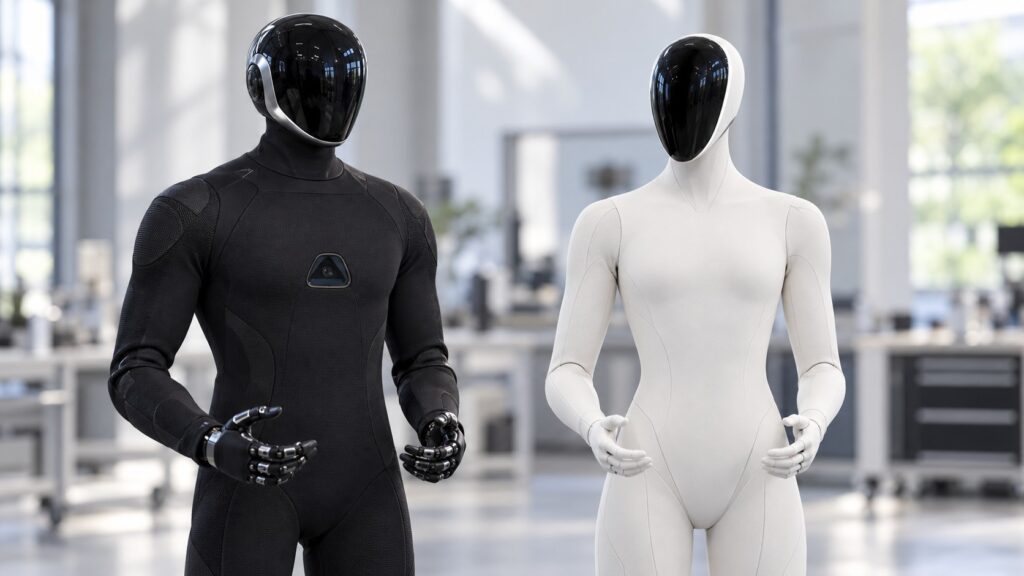
Both images were newly generated with AI using official robot references. They illustrate a comparison and do not document a joint event or a performance test.

Author Nico Nuss has worked with mobile computing and automation software since 2001. His many years of experience and strong interest in emerging technologies shape his work on robotics and artificial intelligence.