
Google made Gemini Robotics ER 2 available in public preview on its cloud platform on October 27, 2026. The news is wider access to a robotics planning model—not the first introduction of the model family or approval for a universally autonomous robot. Businesses can build their own trials, but connecting the model to physical hardware remains an integration task.
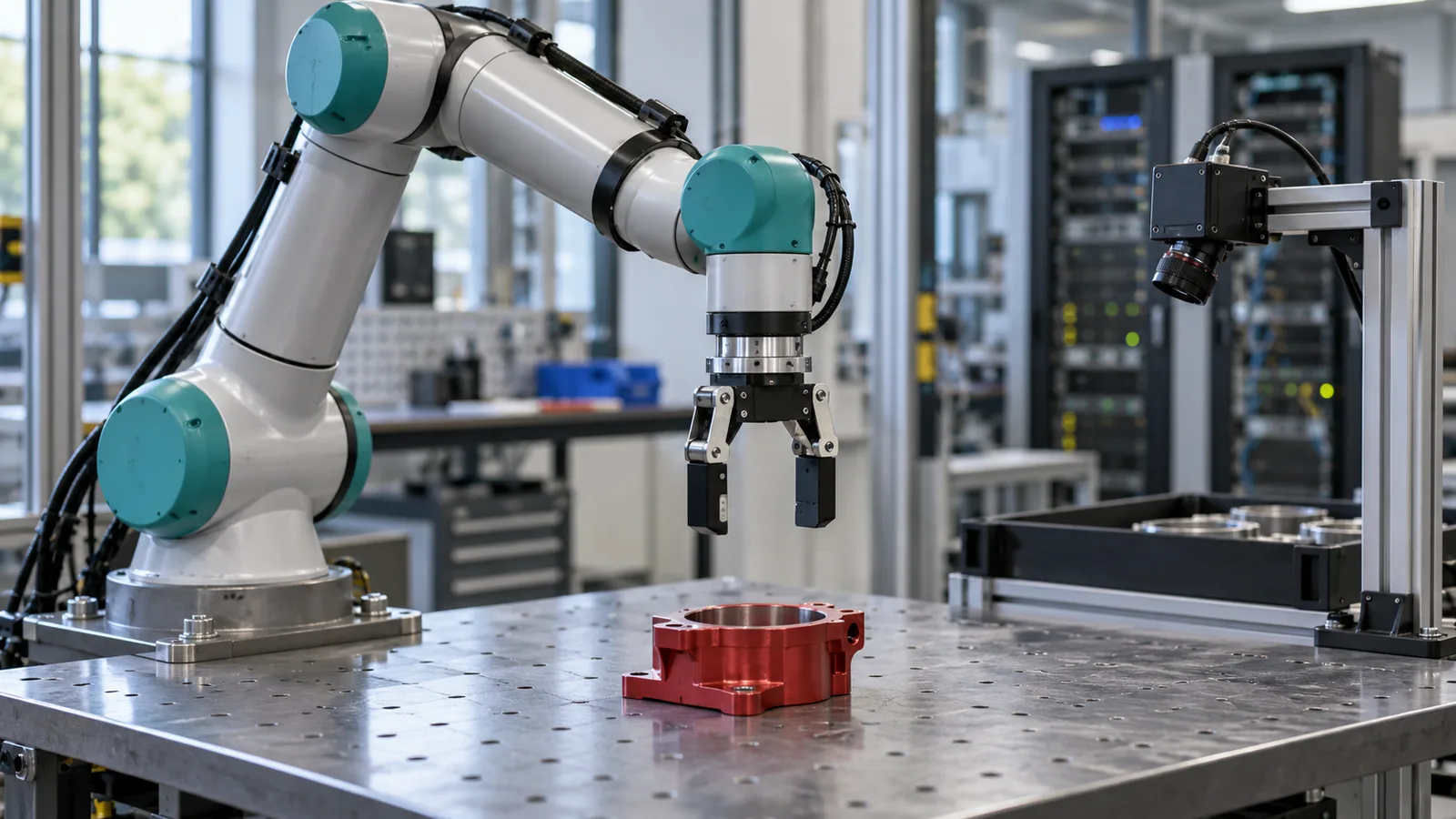
Hero image: original AI-generated symbolic illustration by Alpha Bionic, not a photograph of a Google demonstration.
In this article
A planner is not a complete robot controller
The model documentation describes ER 2 as a vision-language model. It accepts text, images, audio and video, while its output is text. Function calling connects its reasoning to functions supplied by developers. The application must turn a proposed next step or tool request into an authorized action.
Documented capabilities include spatial reasoning, instrument reading, finding events in video and assessing task progress. These could help distinguish “a grasp command was sent” from “the object was actually picked up.” Google’s announcement describes integration with navigation APIs and Vision-Language-Action models. Those action models connect perception and instructions to movement; ER 2 supplies higher-level planning.
What the public preview supports
The model ID is gemini-robotics-er-2-preview. Google lists a global endpoint, structured output, function calling and the GenerateContent API. The current specification does not support tuning, Gemini Live API, Interactions API, batch inference or Provisioned Throughput.
These distinctions matter more for project planning than a broad real-time claim. Accepting video does not make every streaming interface available. Training a separate action model also differs from fine-tuning ER 2 itself. Commercial use is permitted under the applicable terms, but this remains a pre-release offering with potentially limited support.
Alpha Bionic’s assessment: test three layers separately
We would start with a bounded task rather than automate an entire workflow: for example, checking camera images to determine whether a component reached its intended position. Three separate questions make such a pilot more useful:
- Understanding: Does the model distinguish success from failure with shadows, occlusion and unfamiliar viewpoints?
- Execution: Which approved functions may the application invoke, and how are invalid or repeated commands prevented?
- Protection: Who takes over after network loss, timeouts or contradictory feedback? An AI judgment must not be the sole protective barrier.
Data handling also needs checking before hardware trials. A “global” endpoint is not a promise that factory images remain exclusively in the EU. Teams should verify agreed processing locations, access rights and permitted recordings. We have not tested the model; the announcement does not establish a dependable success rate for a specific site.
The practical advance is easier experimentation. A pilot should establish whether that becomes useful operation by measuring completed tasks, human interventions and cost per successful run—not merely a convincing demonstration.
Sources
- Google Cloud: Gemini Robotics ER 2 public preview, October 27, 2026; vendor announcement.
- Google Cloud model documentation, released October 27, updated October 28, 2026; CC BY 4.0, summarized and analyzed here.